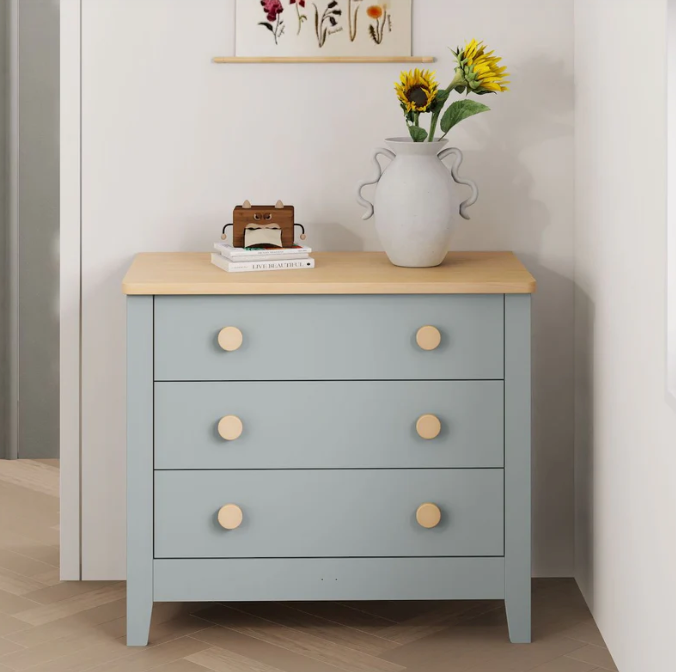

The Australian school morning is one of the most consistently friction-prone routines in family life, and the physical organisation of the child’s bedroom, specifically the chest of drawers, is one of the most controllable factors in that friction level. An Australian school morning where the child dresses independently from a well-organised chest with labelled categories and smooth operating drawers is a fundamentally different experience from one where the child waits for adult help to find the school uniform, cannot operate a sticky drawer, or searches through mixed categories in a drawer with no consistent organisation. The quality and organisation of the kids chest of drawers in an Australian school child’s bedroom directly determines the quality of the school morning routine, five days each week, forty weeks each year, for six or seven primary school years.
Key Takeaways
- The physical organisation of an Australian child’s bedroom, specifically the chest of drawers as the clothing storage anchor, is the most controllable factor in the quality of the daily morning routine.
- Safety specifications including anti-tip wall anchoring, non-toxic finish certification to Australian standards, anti-slam drawer stops, and rounded edges are non-negotiable baseline requirements for any chest of drawers in an Australian child’s bedroom.
- Drawer count should match the child’s actual Australian wardrobe category count so that one category occupies each drawer, enabling the independent daily use that develops from the toddler years.
- Construction quality, specifically panel thickness of 15 to 18 millimetres minimum and smooth drawer mechanisms, determines whether the chest remains functionally sound and pleasant to use across the full Australian childhood span.
- Visual integration with the Australian bedroom’s existing furniture creates a coherent organised aesthetic that contributes to the settled, calm character of the room across the years it serves.
What Australian Parents Need to Know
| Factor | What to Specify | Why It Matters in Australia |
| Drawer count | Matches the child’s clothing category count | One per category enables independent daily use from toddler age |
| Chest width | Fits available wall space with full drawer-opening clearance | Must not block door or prevent full drawer opening |
| Panel thickness | 15 to 18 mm minimum | Structural integrity across Australian climate variations |
| Drawer mechanism | Smooth runners with anti-slam stops | Usability across tens of thousands of cycles in Australian conditions |
| Safety finish | Non-toxic, lead-free, certified to Australian standards | Safe for intensive daily contact in Australian child’s bedroom |
| Anti-tip provision | Included as standard, fixed to solid Australian wall anchor | Prevents tipping when multiple drawers open simultaneously |
How to Choose and Set Up Correctly
What the Australian School Morning Requires From Bedroom Organisation
For an Australian primary school morning to run smoothly with the child dressing independently, the bedroom organisation must provide four specific physical conditions. First, the school uniform must be in a dedicated, clearly labelled drawer that the Australian child can identify and open without adult help. Second, the underwear and socks must be in clearly labelled drawers at the child’s comfortable reach height. Third, the drawer mechanism must be smooth and reliable enough for the Australian school child to operate quickly without adult assistance. Fourth, the chest must be positioned in the room in a location the child naturally walks to during the morning routine, not across the room from where they wake up and dress.
The Organisation Habits That Make Australian School Mornings Smooth
Three organisation habits applied to the Australian school child’s chest of drawers create the smooth morning routine condition. First, the one-category-per-drawer system with clear labels establishes the foundational condition: every item has a consistent home that the Australian child knows. Second, the laundry return habit, consistently returning clean clothes to the correct categorised drawer each laundry day, maintains the system in working condition without daily adult intervention during the school week. Third, the Sunday evening preparation routine, checking that the school uniform drawer is stocked with clean items for the coming week, prevents the Monday morning discovery of an empty school uniform drawer that disrupts the Australian family’s start to the school week.
For a quality range of children’s chests of drawers built to Australian specifications, visit boori collections and explore the Boori kids chest of drawers collection.
Frequently Asked Questions
At what age can an Australian school child be fully responsible for their morning getting-dressed routine?
Most Australian children from Year 1 or Year 2, around age six or seven, can be fully responsible for retrieving their clothing from a correctly organised and labelled chest and completing the morning getting-dressed routine without adult direction, provided the physical organisation system is well-established and the chest mechanism is smooth and reliable.
How does a sticky drawer affect the Australian school morning?
A drawer that requires adult help to open, or that requires significant force to operate, removes the child’s ability to independently access their clothing and places the drawer-opening task back with the adult. This single friction point can cascade into a dependent morning routine across the years in which the Australian child would otherwise be capable of dressing independently.
Is it worth investing in a quality chest of drawers for the Australian school morning benefit alone?
Yes. A quality chest of drawers that enables five independent school mornings per week across forty school weeks per year for six or seven primary school years represents approximately 1,200 to 1,400 independent school mornings removed from the Australian parent’s morning management responsibilities. The value of this independence across the full Australian primary school span significantly exceeds the cost differential between a quality chest and a lower-quality alternative.
What is the most important single improvement an Australian parent can make to the school morning routine?
Setting up a clear one-category-per-drawer organisation system in the Australian school child’s chest of drawers, with labels at the child’s eye level, before the start of the school year. This single organisational intervention produces more consistent improvement in morning routine independence than any instruction, encouragement, or reward system applied without the supporting physical organisation infrastructure.
Final Thoughts
Visit boori collections to explore the full range of quality children’s chests of drawers available in Australia.